Incoming and First Year BHSc Students
Tips
〰️
Resources
〰️
Tips 〰️ Resources 〰️
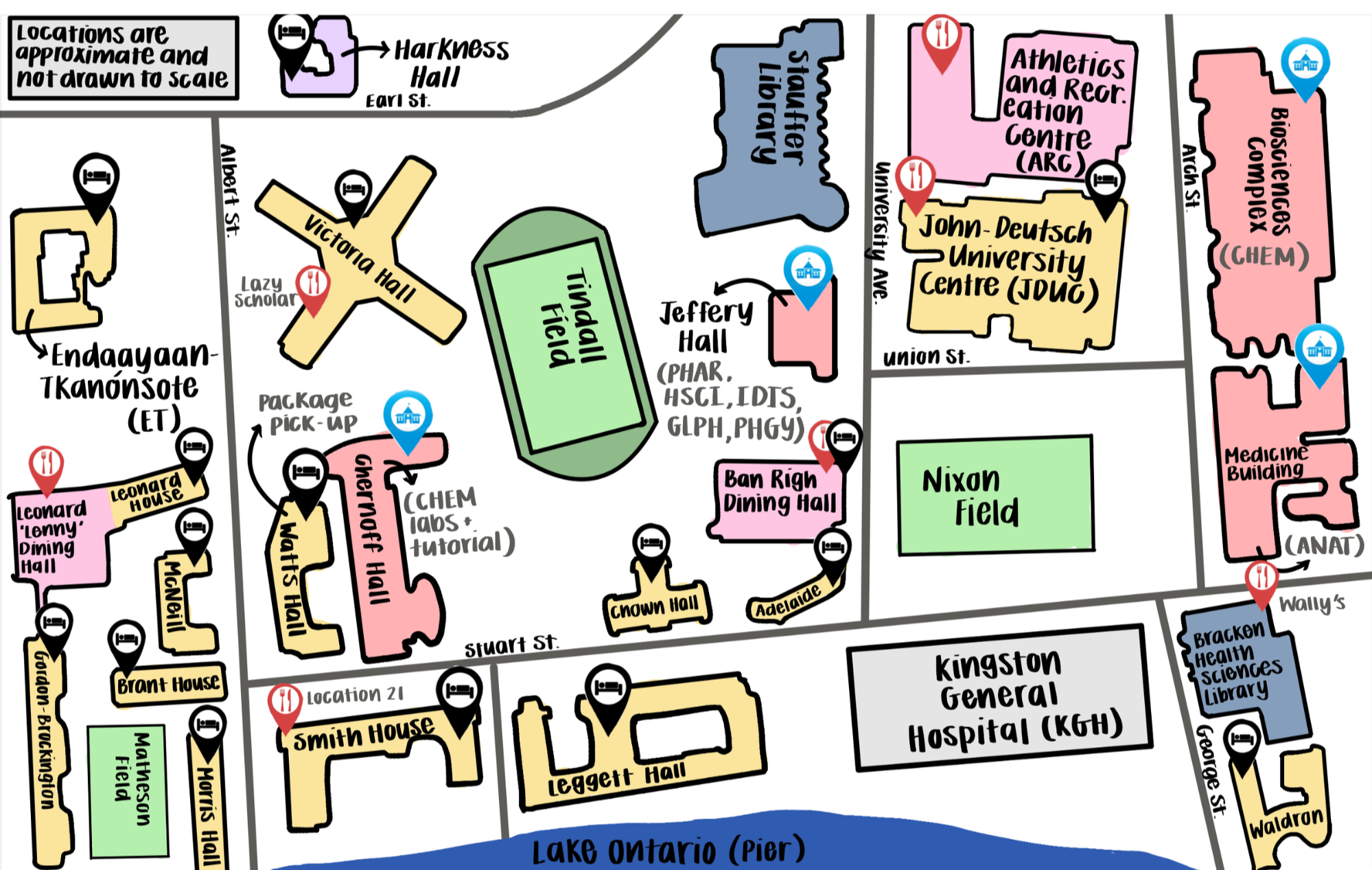
First-Year Health Science Lecture Halls, Dining Halls, Residences, and Study Spots
Queen’s Campus Map
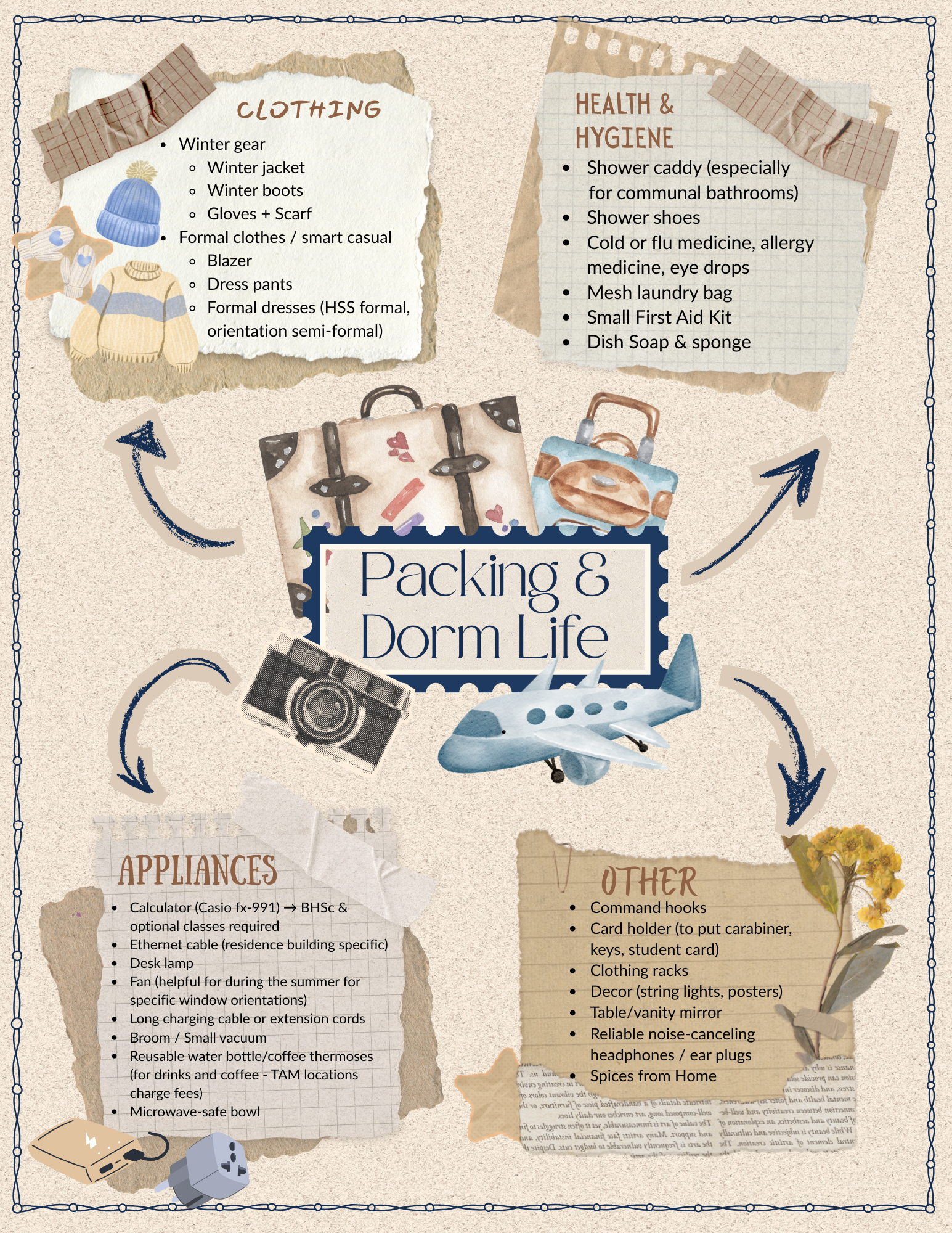
Packing & Dorm-Life Guide
Starting university is exciting—but figuring out what to pack can feel overwhelming. This list is designed for your go-to guide for items current Queen’s BHSc students recommend to make dorm life feel like home, stay organized, and be fully prepared for campus life.
Curious about core health science courses? Read about advice given by YOUR future professors regarding course structure, expectations, valuable skills, and fun facts about their teaching journey.
Advice From Professors
More professor insights for the remaining core courses are on their way! Stay tuned and check back soon for the latest updates and insights.
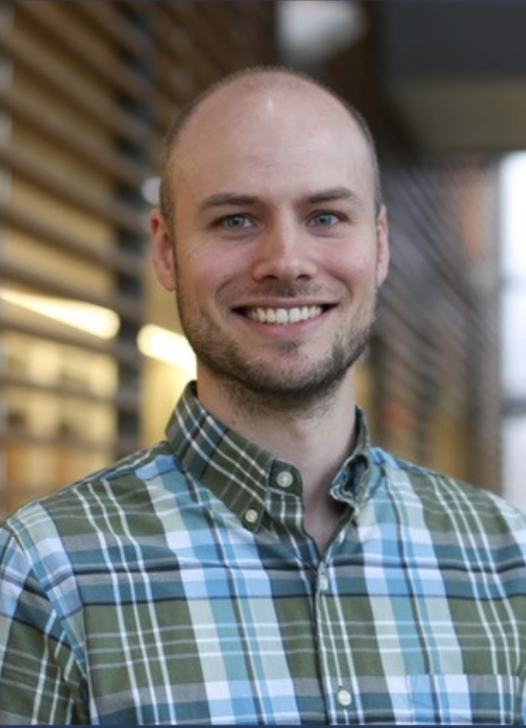
Logan Bale
ANAT 100
Q: Could you briefly describe your course and its main focus?
A: ANAT 100 is like many Health Sci courses. It's based on the idea of having a flipped classroom, whereby there are digital modules that ideally would be worked through beforehand, and then there would be an active learning meeting time once a week for two hours. That happens in the Anatomy Learning Center. The flipped classroom involves learning about the various parts, functions, relationships of the human body, kind of from head to toe, and then having a chance to apply those in a hands-on way with your classmates and with help from either instructors or teaching assistants in the room in the lab. To go from learning about the heart from a screen to holding one in your hand and having that 3D relationship kind of solidified.
Q: What is something that you wish students knew about this course that they wouldn’t be able to find online?
A: For a lot of people in these courses that we support, it's really the only time in their lives that they will have a chance to do this kind of thing. So making the most of it is what we want, and having a natural curiosity and exploring the body via the resources we have to learn about ourselves. That natural curiosity to want to go and learn is what we would love to see, since we put dozens of hours into preparing these specimens for the students’ learning.
Q: How does this course help prepare students for future courses or careers in health sciences?
A: ANAT 100 will segue into multiple upper-year courses. Some of the most exciting ones are ANAT 380 and ANAT 391. ANAT 380 is a clinically kind of focused anatomy course. Each module starts off with a clinical case, and then the content helps you put the picture together. This puts you on track to do things like OSCEs in med school, and eventually, work in a clinical setting. ANAT 391, on the other hand, is a dissection-based course. It's less about learning from a module perspective and more about learning how to dissect, and it’s the largest course that we have that involves undergraduate dissection, which for a long time wasn’t even an option for undergraduates. If you're a student who wants to hold the tools and maybe thinking surgery or dentistry, then 391 is the best chance to do that. Lastly, a good understanding of the form and function of us as humans is critical to all kinds of health-related professions.
Q: What are some common challenges students face in this course? What habits or strategies tend to help students succeed?
A: Content load is often a struggle. The course has 12 modules, meaning you can't really take a week off, even when you're doing your tests. The block theories are also outside of the dedicated lab time, and the week we did the bell ringer, we made up for a missed lab by having two in one afterwards. As for resources, the general baseline would be the modules, and it’s important to keep up with them, especially before you come in for the active learning sessions. The Scalable Gross Anatomy and Histology Image Catalogue, which is shortened down to SGAHIC is also helpful. Those two things and utilizing the lab sessions are the highest-yield uses of your time.
Q: What part of teaching this course do you enjoy most?
A: ANAT 100 has one of the highest attendance, participation, and engagement rates even when compared to the schools of medicine, nursing, and kinesiology, and I think a big part of that is the fact that it's the first year students’ first time seeing anatomy. There's nothing more rewarding than those moments of excitement. Every conversation you have with someone, they're like, "This is the coolest moment of my life”. So that never gets old.
Q: Is there anything else you would like incoming Health Sciences students to know about this course?
A: The last thing I’d say is that there's a lot of things that you can do within healthcare, sciences, or anything in life where you can find great fulfillment. The system is set up so that not everyone will succeed, but it's okay. You can still succeed in a lot of other ways. It doesn't have to be medicine. Students constantly think, Am I building my CV enough? Is my GPA good enough? It's a lot to put on someone who is a young adult. I would say remember to keep in mind that that's not the end of the story.

Jeanne Mulder
PHAR 100
Q: Could you briefly describe your course and its main focus?
A: PHAR 100 is an introductory course on pharmacology. The goal of this course is to provide students with a basic foundation in pharmacology so they can make informed choices with respect to medications and drugs.
Q: What is something that you wish students knew about this course that they wouldn’t be able to find online?
A: The course assessments are designed to be collaborative, but still showcase independent work. So while there is group discussion at the start of each of the two written assessments, it is worth a smaller portion of the grade. The majority of the grade is for the final submission that is completed individually. The hope with this structure is that students learn to do the research together, brainstorm ideas, discuss concepts, and then can confidently complete the independent portion to showcase their knowledge and application of concepts.
Q: How does this course help prepare students for future courses or careers in health sciences?
A: Pharmacology is everywhere - we all take medications at some point in our lives, and there are not many health professional programs or health sciences-related careers that do not involve pharmacology in some aspect. Past students commonly tell me that the information they learn in PHAR 100 sticks with them throughout their undergraduate degree and beyond.
Q: What are some common challenges students face in this course? What habits or strategies tend to help students succeed?
A: The most common challenge faced by students in the course is the attempt to memorize every single detail we cover. There is a lot of application to pharmacology, so while some things do need to be memorized, not everything does. For example, being able to take a mechanism of action and predict the therapeutic and adverse effects is a great skill and something I try to encourage through our active learning in-class.
Q: What part of teaching this course do you enjoy most?
A: I most enjoy that this is often a brand new topic for students, which means there are many 'A-Ha' moments. I love hearing the stories from students about how what we learned in class helped them or their sibling/friend/parent/etc. in one way or another. I also very much enjoy that this is a topic that students will hopefully remember and utilize throughout the rest of their lives - as I said, it's so applicable!
Q: Is there anything else you would like incoming Health Sciences students to know about this course?
A: Do not worry about doing any pre-reading or learning over the summer. My expectation is that first year students do not know anything about pharmacology, and we will learn it all together. Enjoy your summer and when term starts, we will begin learning!

Colleen Davison
GLPH 171
Q: Could you briefly describe your course and its main focus?
A: GLPH 171 is the Introduction to the Social and Physical Determinants of Health and Disease, and it's a required course for all Bachelor of Health Sciences students. The course is really just an introduction to what determines our health, beyond our biology.
Q: What is something that you wish students knew about this course that they wouldn’t be able to find online?
A: I think that students should be aware of just how important the course is. It's not a difficult course; it's not a technically challenging course, but it's really a critical course for their understanding of what health is.
Q: How does this course help prepare students for future courses or careers in health sciences?
A: I think it helps students have a clear understanding of how to define health and what allows us or causes us to be healthy or not healthy. I also think that in the course, they get introduced to a variety of potential trajectories in the health sciences, including research, public health, epidemiology, health promotion, and other areas, even outside of health, that are aligned with health like housing, poverty, advocacy work, that kind of stuff.
Q: How does this course help prepare students for future courses or careers in health sciences?
A: I think it helps students have a clear understanding of how to define health and what allows us or causes us to be healthy or not healthy. I also think that in the course, they get introduced to a variety of potential trajectories in the health sciences, including research, public health, epidemiology, health promotion, and other areas, even outside of health, that are aligned with health like housing, poverty, advocacy work, that kind of stuff.
Q: What are some common challenges students face in this course? What habits or strategies tend to help students succeed?
A: It's not the most technically challenging course that Bachelor of Health Sciences students do, but it is a really important course. So for them not to put it on the back burner while they're really focusing on other really challenging courses, and then getting to the midterm and saying, “oh shoot, I should actually open the modules,” I think that's the biggest challenge that I see. Most people, if they just stay up with the material, it's not going to be too challenging, and at the end, you know, it's pretty easy to be successful if you do that.
Q: What part of teaching this course do you enjoy most?
A: I love teaching first years. It is challenging with the volume of students in the class, but now that the course is set up such that it works as best as possible, the small pieces aren't as onerous as they used to be. What I really enjoy is that the attendance is very high for the class. Partially, it's because there are points for peer assessment every week and things, but almost everybody comes to class, which to me is the critical aspect for learning. I also love that because it's very timely, I can switch up certain topics. Last year, there was a lot of wildfire smoke, so I switched up a wildfire example, and we interacted around that. Climate change was an area that students were really asking for more on.
Advice From First Year Health Science Students
Hear directly from first-year students as they share their personal experience, lessons learned, and helpful advice for transitioning into university life!
Study Resources
Access free resources like studying notes, games, and ANKi decks for core first-year courses to help you stay on top of your work!
Struggling with keeping on top of your work? Access our tracker templates for exams, deadlines, grades, and more!
Orientation
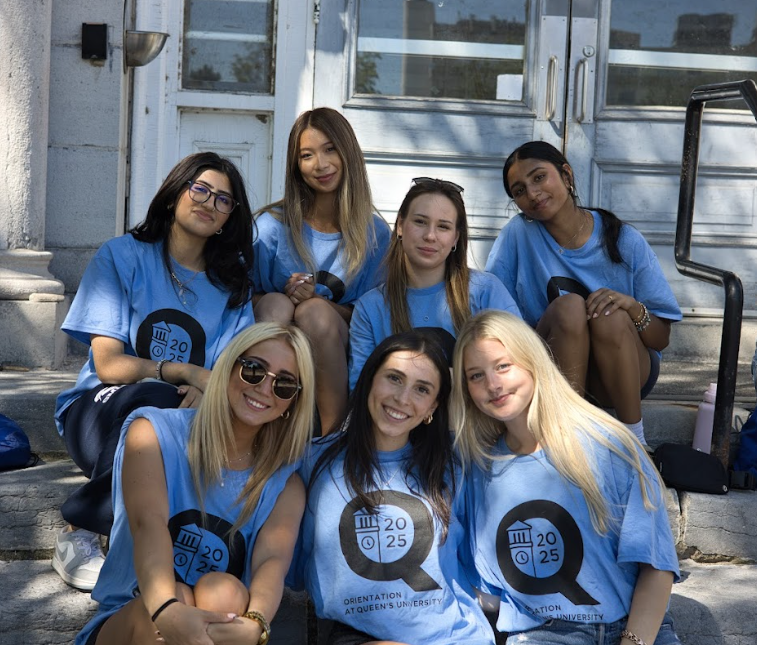
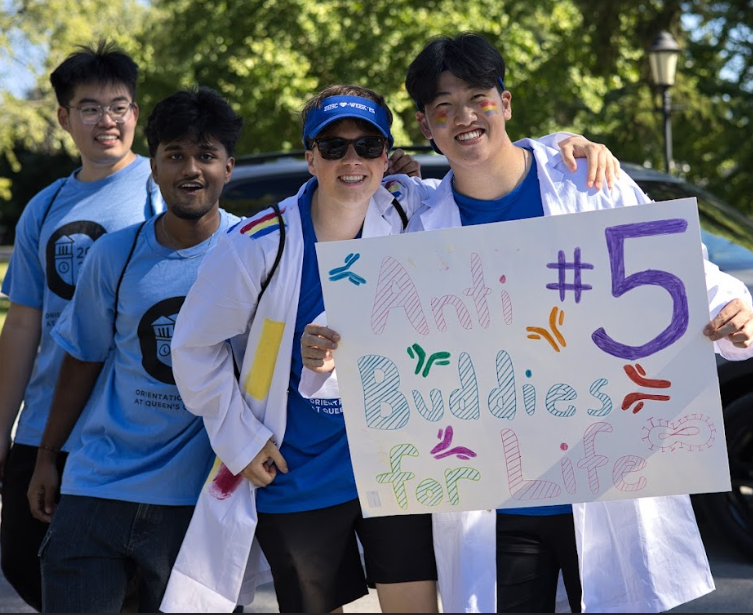
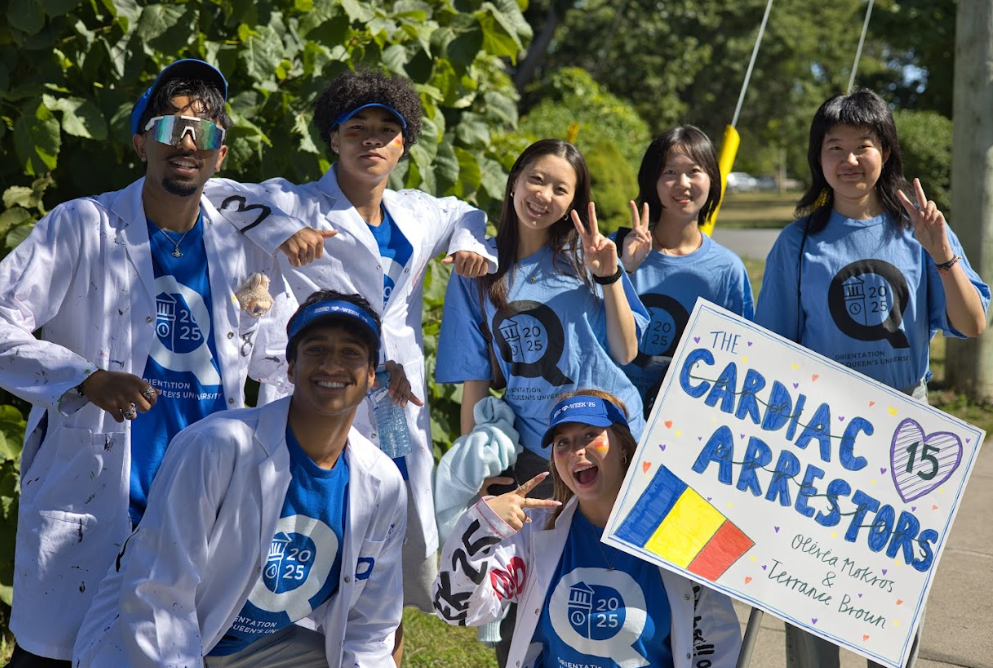
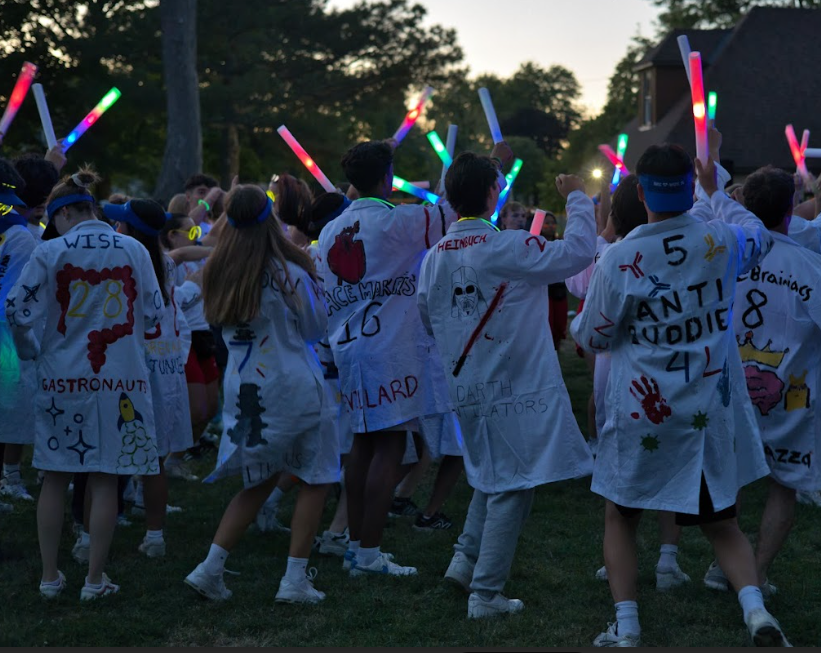
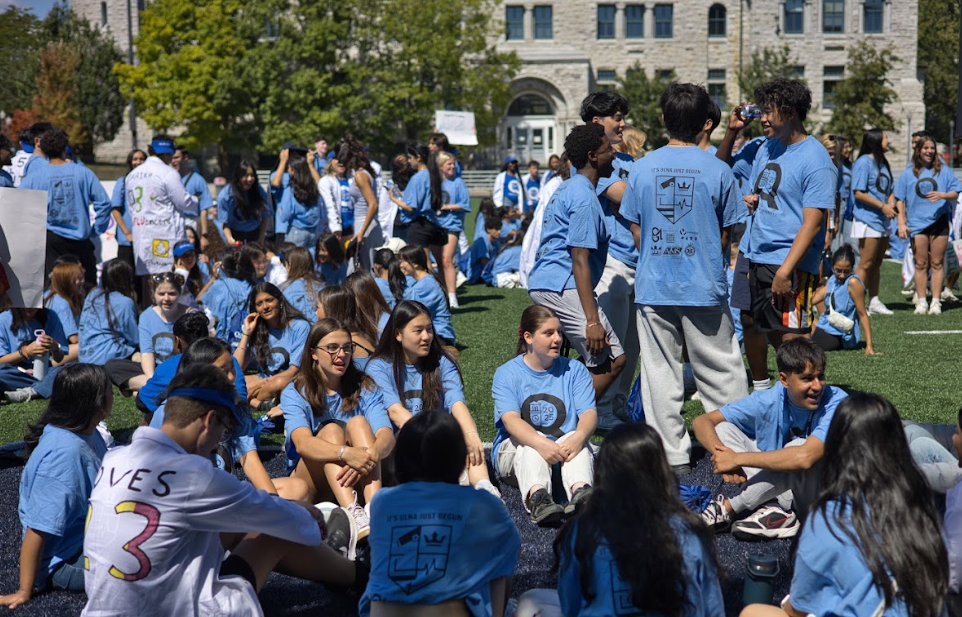
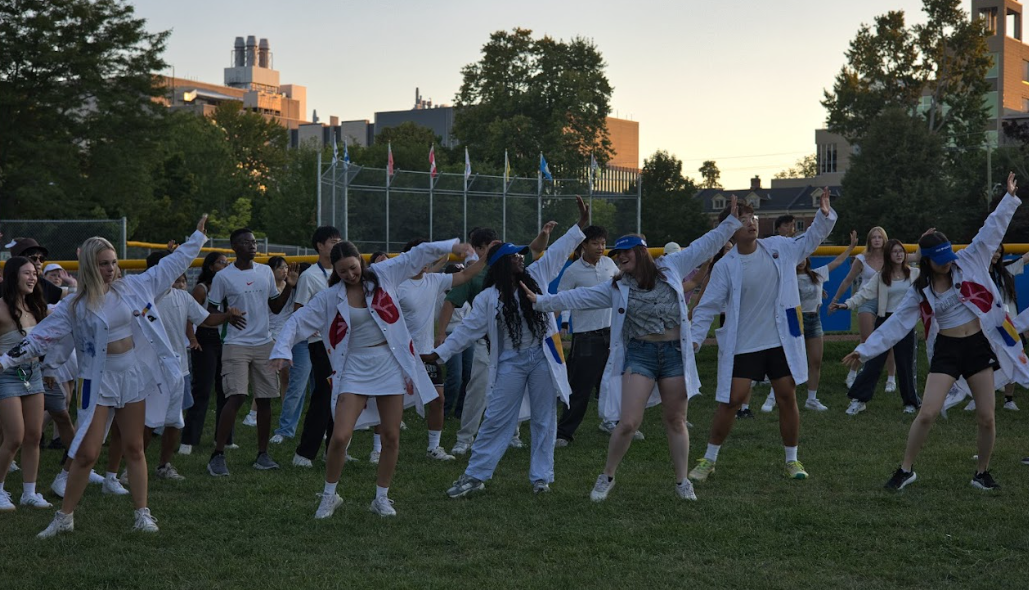
Starting university can be scary; however, one of the best and most common tips we have is participating in Orientation! Health Science Orientation takes place during the weekend before classes begin and the weekend after the first week of classes and is one of the most exciting ways to start your journey at Queen’s! Designed to help incoming students feel welcomed, connected, and prepared for university life, orientation gives you the opportunity to meet your future classmates, get to know upper-year students, and have A LOT of fun with your future peers.
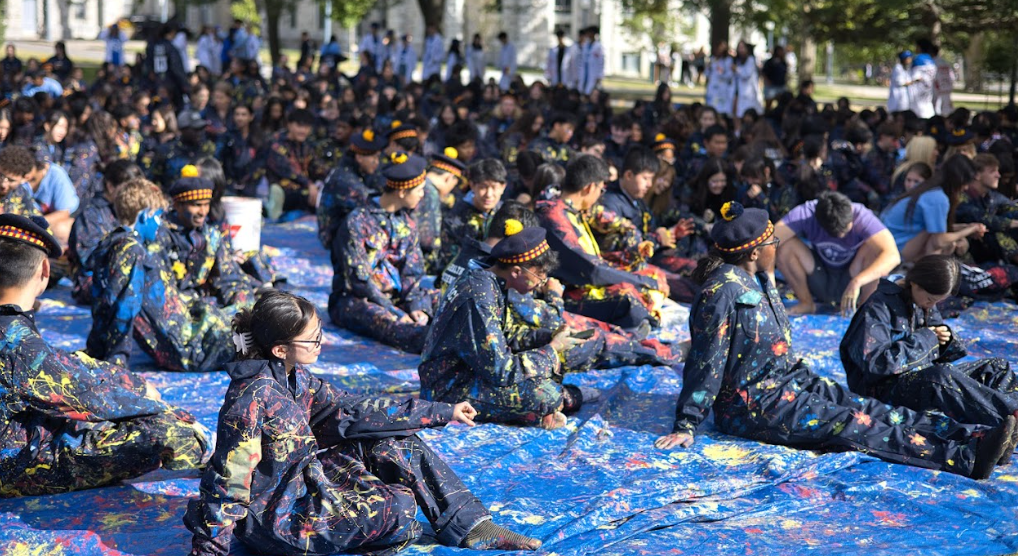
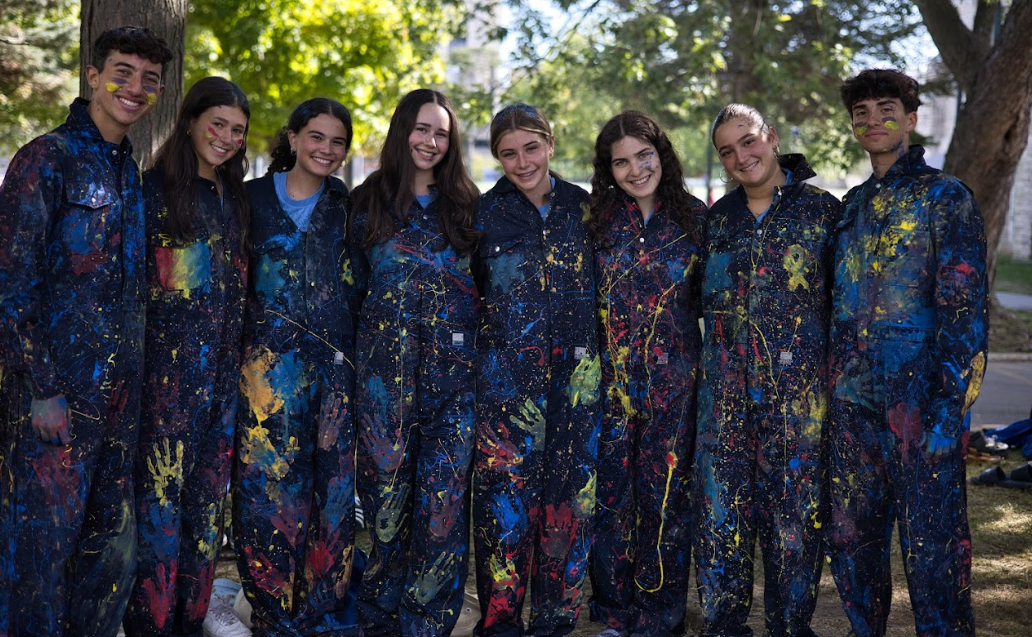
Throughout the week, you can look forward to a wide range of fun events and traditions, including dances, games, social activities, and painting the iconic Queen's coveralls that become a memorable part of your Queen's experience. Whether you’re excited to jump right in or feeling a little nervous about starting university, orientation is a supportive environment for everyone where everyone is encouraged to participate, make new friends, and create memories that'll last a lifetime.
Many students say Orientation was one of the highlights of their first year and helped them feel much more confident and connected going into September. It’s definitely an experience you won’t want to miss!
A Sneak Peek into Orientation!
For more information about Orientation and how to sign up, please visit:
Health Science Orientation Instagram @healthsciorientation
or email bhscorientation@queensu.ca